
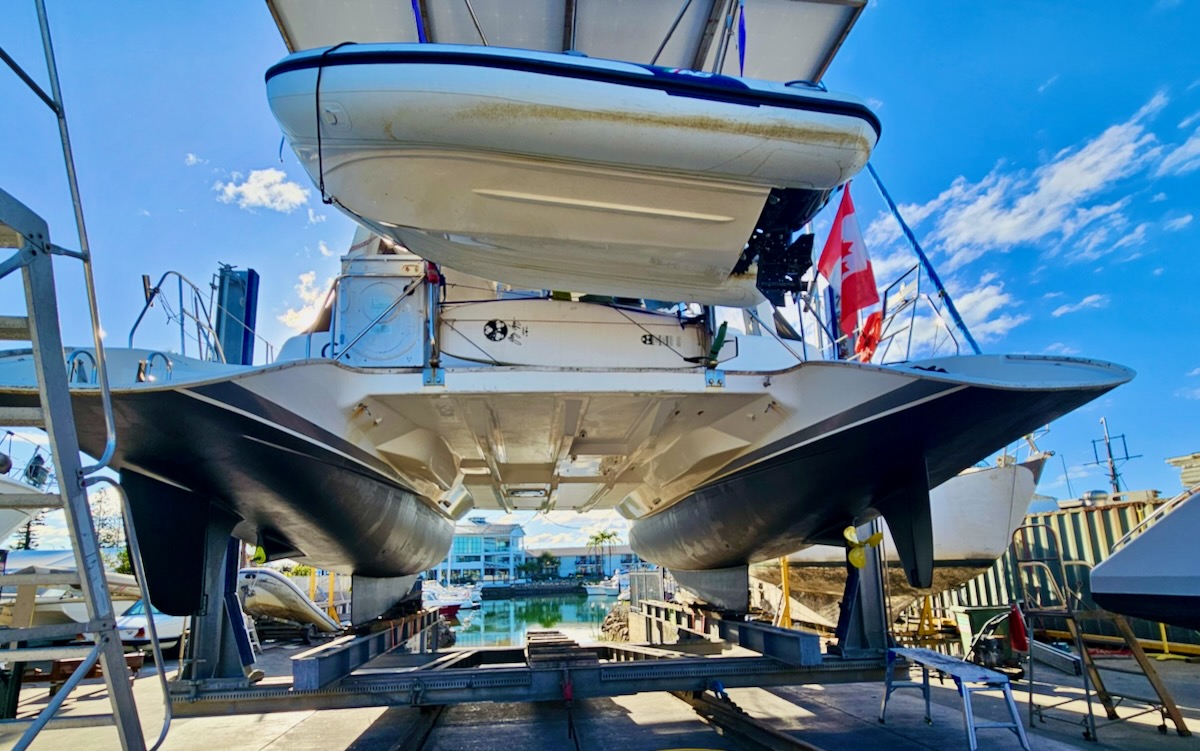
After our “Worst Wave” incident, Go was stuck in Port Macquarie for almost five months. Go was a mess. Everything got soaked from our windows being smashed in. Our electronics, engines, books, appliances, and more. We knew early on that getting Go back on the water would be a massive effort. Here’s what it was like.
Getting Insurance Approvals
The good news was that we got Go to safety in the marina in Port Macquarie. In between trying to get the insurance company to help us, we cleaned and dried what we could and moved off the boat for a few weeks.
We tried to dry things out the best we could but we were hampered by the seasonally terrible weather. Over the period we were there, Port Macquarie had floods at least twice, and a lot of rainstorms. With our smashed front windows it was hard getting and keeping things dry.
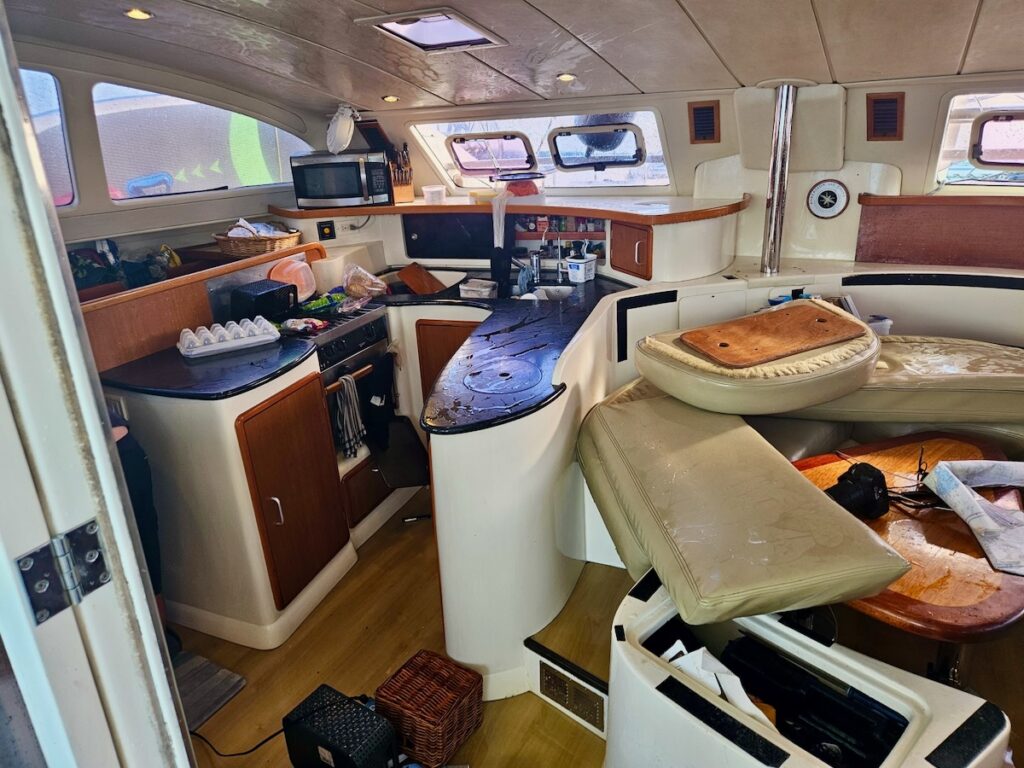
Once our insurance company realized the size of the job, they sent an assessor to look at the boat and report on the damages. He took a few weeks to submit a report and then we waited. We went on several trips while for insurance.
During that period we did get some things done. We replaced electronics like our laptops, phones, and ipads that were lost or destroyed by the wave.
One of the best days of the year happened in Japan when the email came from the insurance broker saying they’d approved our submission. Finally the work could begin.
Getting Go Back on the Water
After we got the approval we got to the business of getting Go back on the water. There were three major projects that needed tackling, and we added one more at the last minute.
- Replace Both Engines
- Convert Electrical system from 120V to 240
- Replace Front Windows
- Replace Generator
There were some other things we had to replace also, such as the stove which froze up after the salt water doused it. We also decided to replace our worn out seat cushions.
Hauling Out
Once we got the approval to start work, we had to book a spot in the yard. That took about two weeks, when they booked us in for 10 days. It was a tight timeline, but they managed it well. That 10 days also included a full bottom clean and paint, plus new PropSpeed for the propellor.
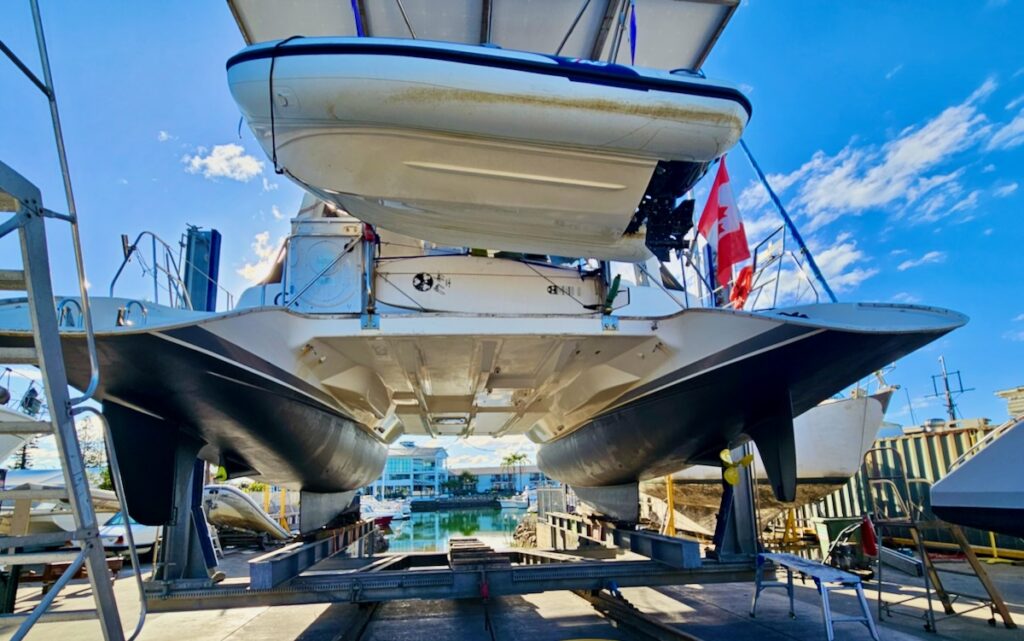
On the day we were to bring the boat to the haul-out spot, we tried to start the starboard engine, the one that got us into port. It started briefly and then stopped. So they ended up towing us into the lift. Once we opened up that engine after haul-out we saw that the oil pan had corroded through and the engine bilge was full of foul engine oil. Made for a dirty first project on the yard.
Replacing Both Engines
The biggest and most challenging project of all was replacing both engines. One of them was fully submerged with the wave, and the other was partially submerged. While it got us into Port Macquarie, it was too damaged and needed replacing. Luckily Port Macquarie has an excellent boatyard with a lift large enough to haul out Go, and talented trades. The only trade that had to travel was the diesel mechanic who is from Coffs Harbour, a couple hours drive north of us.
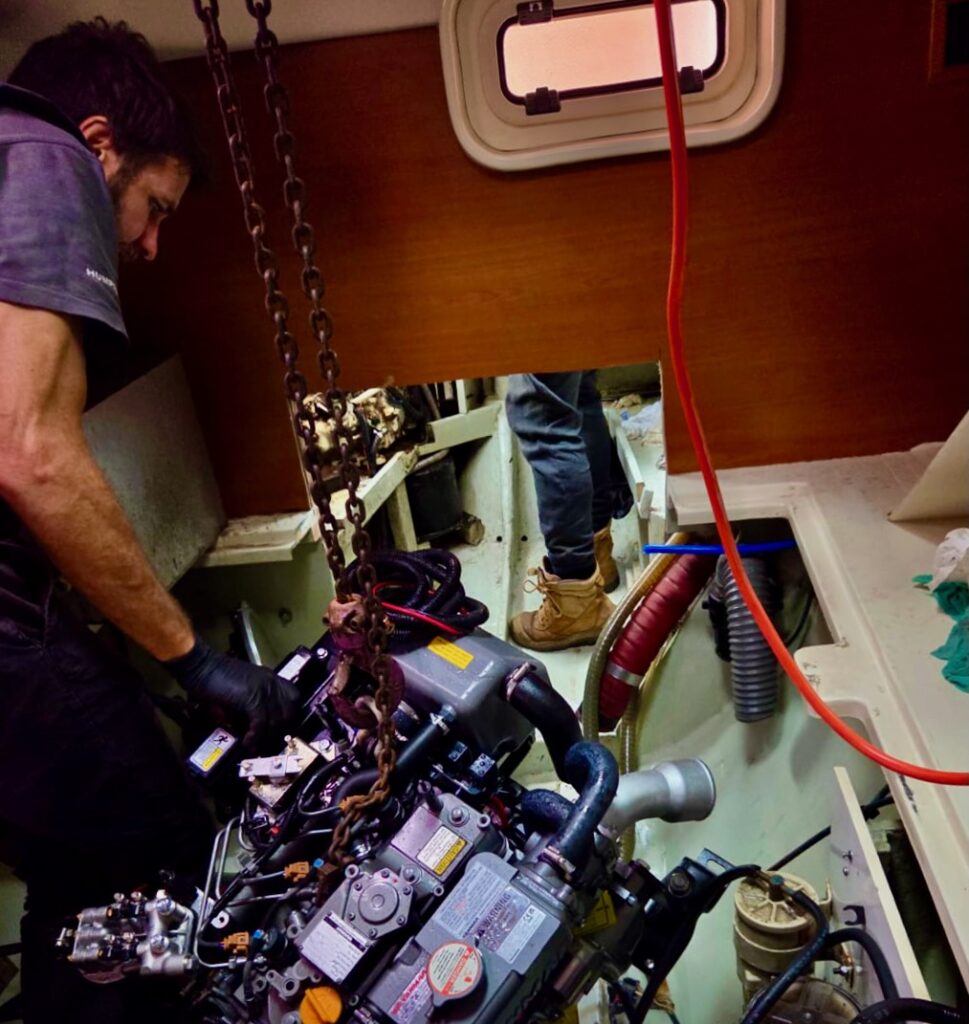
Removing the old engines
Getting the engines out of Go was not simple, and this gets technical for non-boaties.
Our engines are linear drive which mean they sit further forward than most catamarans. Since they’re located under the rear cabin beds, there is no easy way to remove them from above as the door and hatches to that room are too small. So we would have to bring them out through the rear lazerettes which we use for storage.
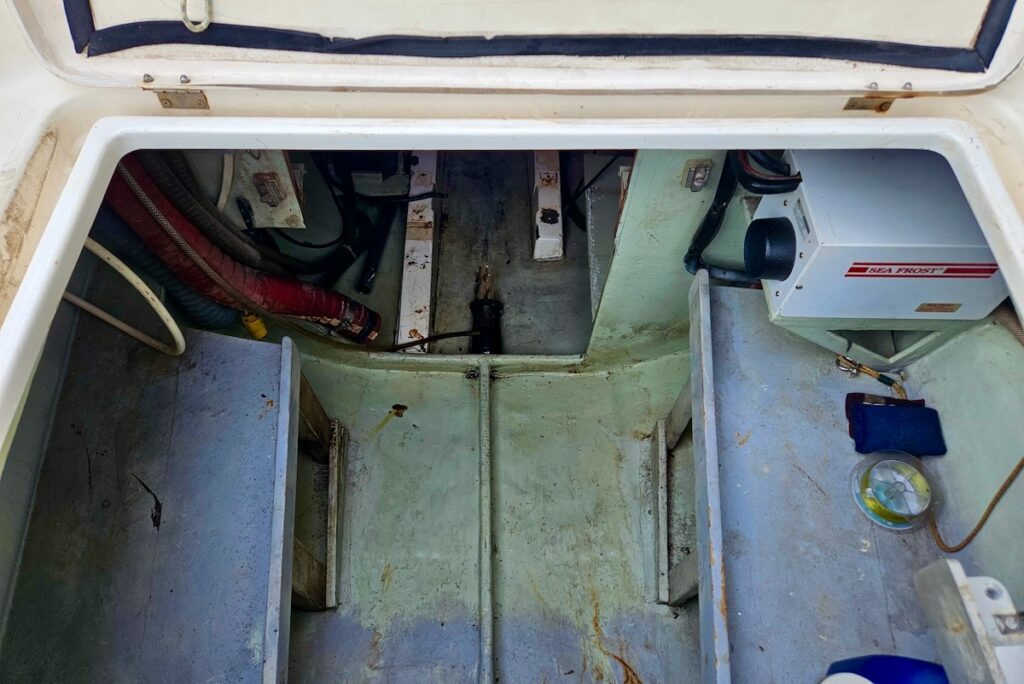
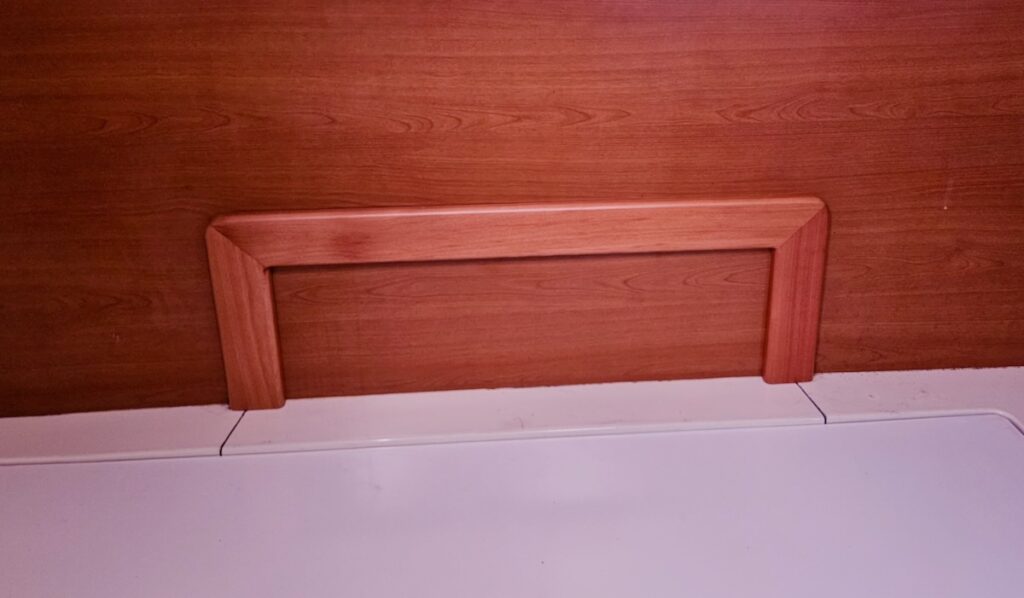
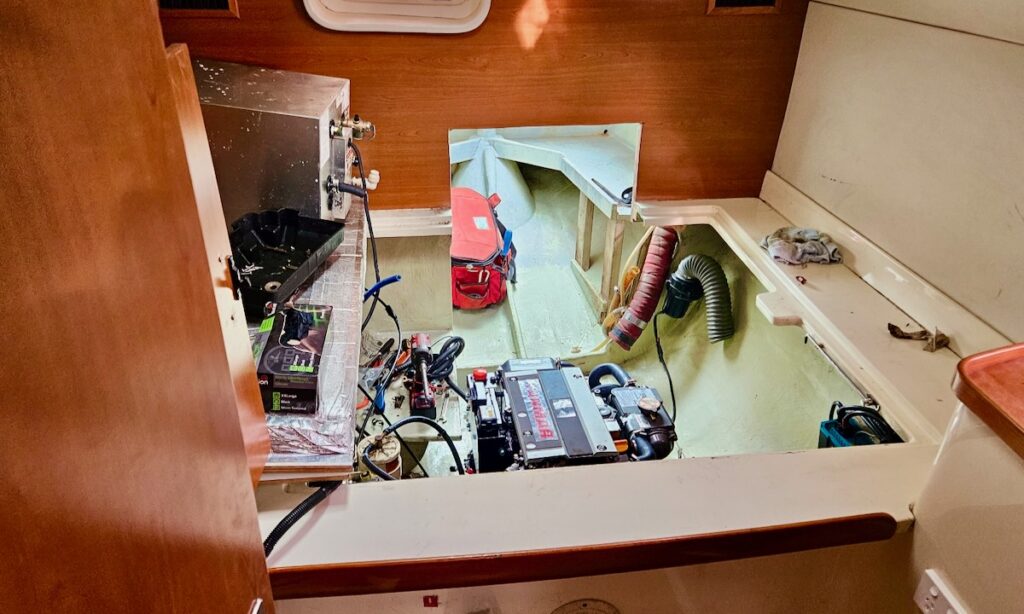
There is a small hatch between the lazerettes and the engine room. It might have been possible to get the engines out by tilting them on their side, but the yard experts decided that was not safe for the engines. Instead, they cut a small indent in the wall above the hatch so they could lift the engines up in the cabin room, slide them back and then lift them out the back using the yard forklift. It was a challenge, but they managed it.
installing the new engines
Once the old ruined engines were out, Ben, the diesel mechanic, aligned the engines’ feet with the prop shafts exactly. Then all the steps of reconnecting the other hoses and wires – fuel, coolant, raw water, sensors etc. I was amazed how fast he got it all done.
Once the engines were back in, the folks at the yard built a very nice piece of trim to cover up the cut in the hole between the lazerettes and engine room.
Electrical System Change
When we got hit by the big wave, a number of our 120v outlets were doused with water. We also lost many appliances to salt water damage, including our microwave, toaster, tea kettle, and more. As 120v outlets are hard to find, we made the decision to change the boat to an Australian 240 system. Now we have a new electrical system and electric appliances to go with it. We figure it’ll be a long time before we are in a country with 120v anyway.
The electric conversion involved changing out 15 sockets on the boat (yes, the boat has probably too many outlets) and swapping out our inverter which converts our 12V DC system to AC. It turns out Australian outlets are a tiny bit larger than American ones, so the electricians did a bunch of fibreglass cutting to get them in.
In the end we switched from having both a battery charger and inverter to a Victron MultiPlus which does both. It also charges at almost twice the speed of our old charger.
While in the Yard
With all the havoc on the boat, there was no way we could live onboard. No windows, no running water, no electricity, and all the lazarettes emptied of their storage? That’s no way to live. For the 10 days plus a little extra on either side, we moved into a nearby apartment. We could easily walk or bike to the yard from there, which was good, because Domino couldn’t come with us. For one, most rentals don’t allow pets, and Domino is happier when she isn’t removed from familiar surroundings.
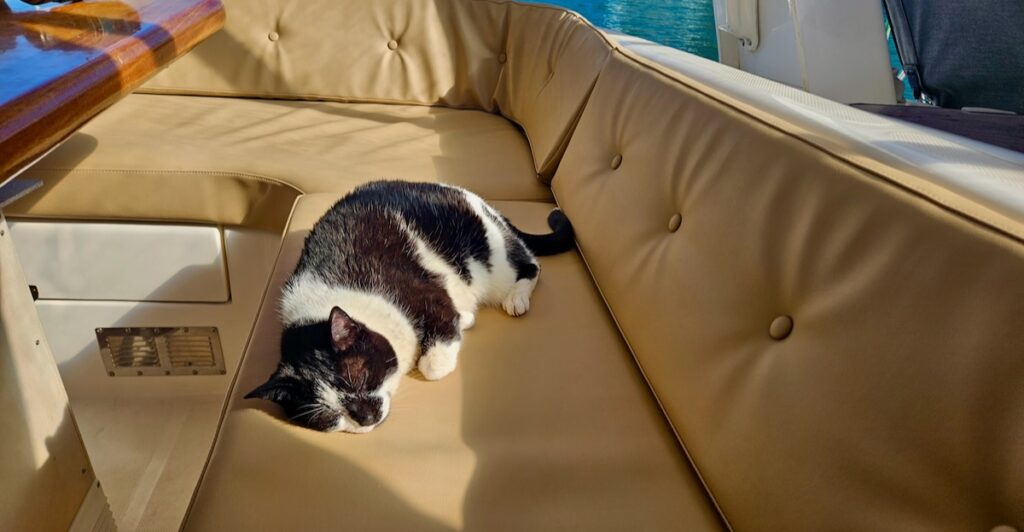
Was Domino safe in the yard? That was our only concern, because the yard is home to a dangerous and territorial cat named Sebastian.
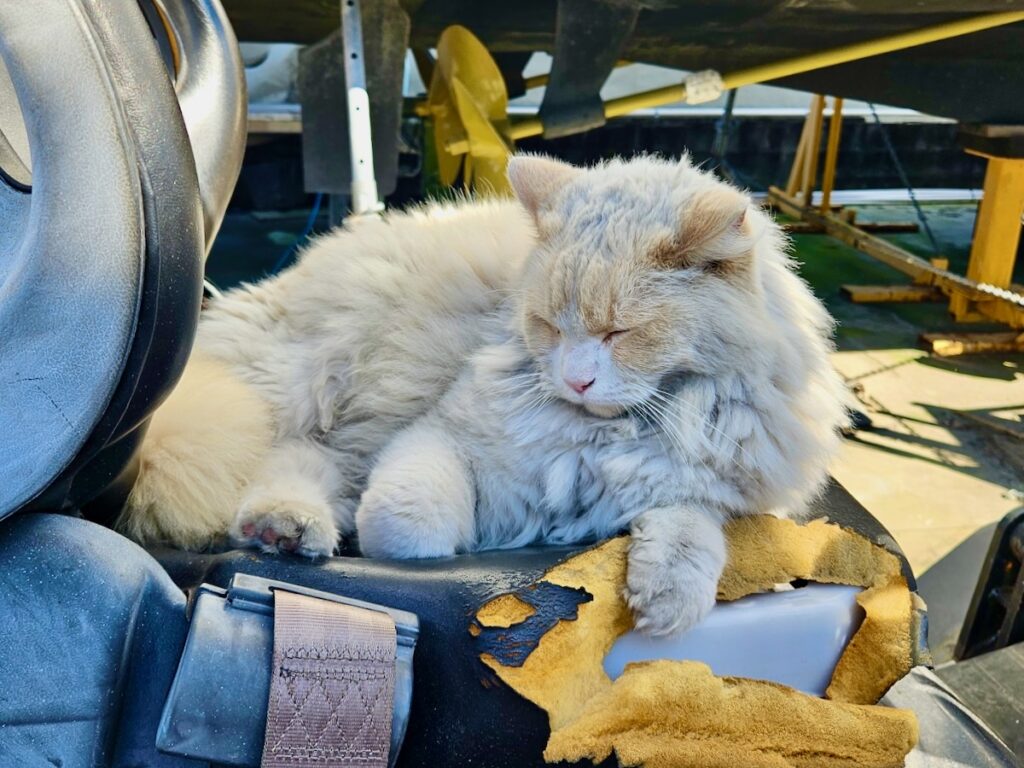
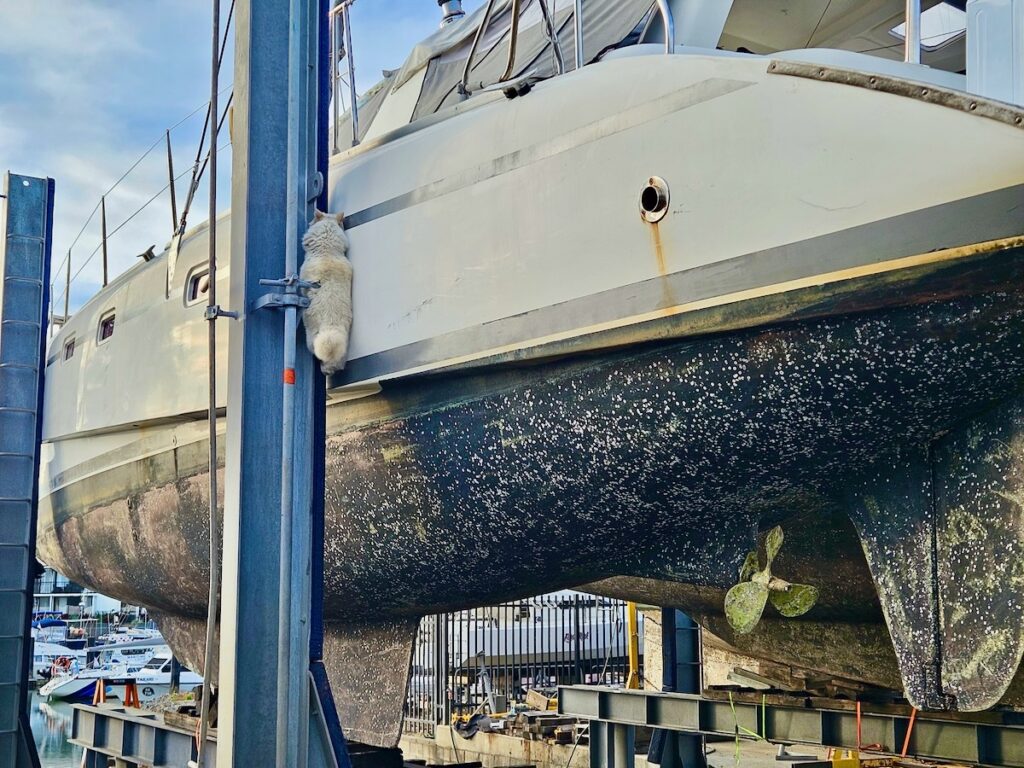
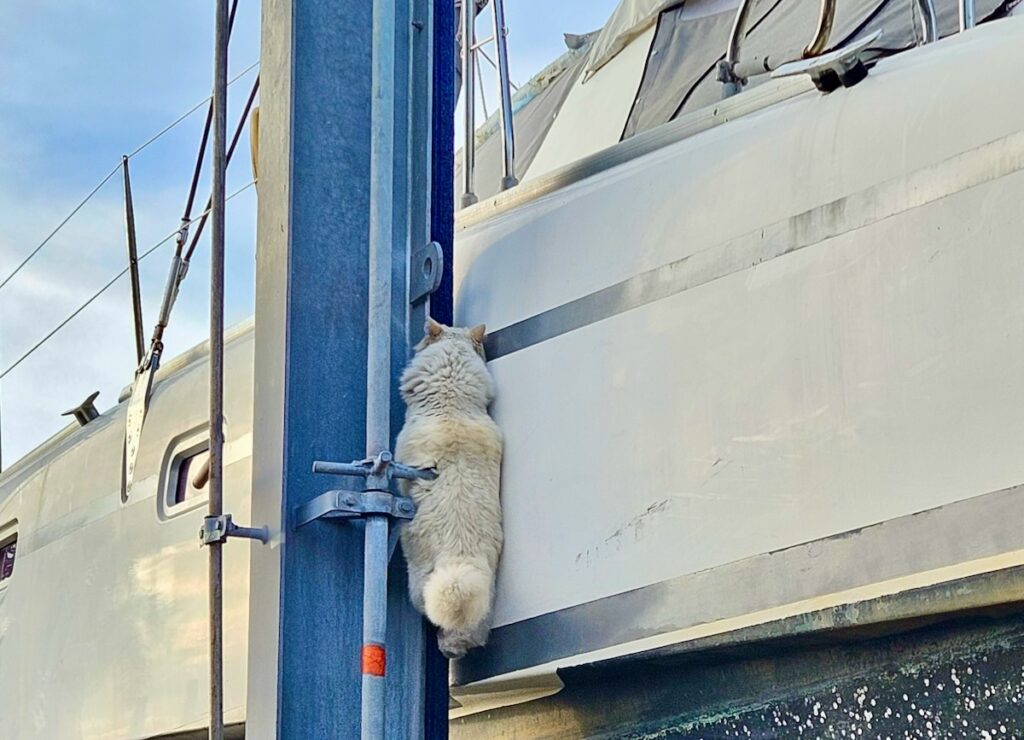
Sure, Seb looks sweet and fluffy, and he is. But he also can get onto any boat, no matter how high. We saw it, he made it onto Go without using the ladder.
Our response was to close the doors and keep Domino inside when we weren’t there. She really didn’t mind since it was winter and overnight temperatures were around 5C. Brrr. Domino and Seb never met, so no cat fights in the yard.
Replacing the Front Windows
The last major project while we were on the hard was replacing the front windows. These were thick 10mm plexiglass panels – two of them, each with two opening portholes. We decided that the ones over the galley area were unnecessary and sometimes guests leave them open after cooking and the rain gets in. So we left that panel whole, and used the good old ones on the starboard side windows where they were.
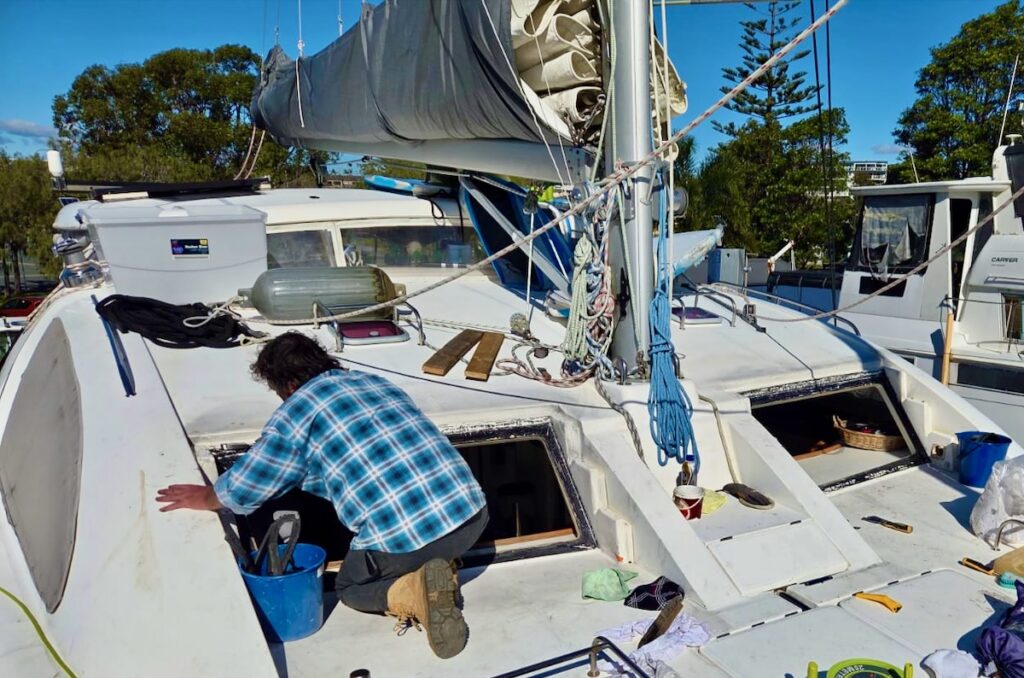
One of the challenges with this project was erasing the remnants from the duct tape used to hold the tarps over the windows while we were waiting for the replacement. Even with a lot of scrubbing and elbow grease, there are still black marks on the fibreglass around the area.
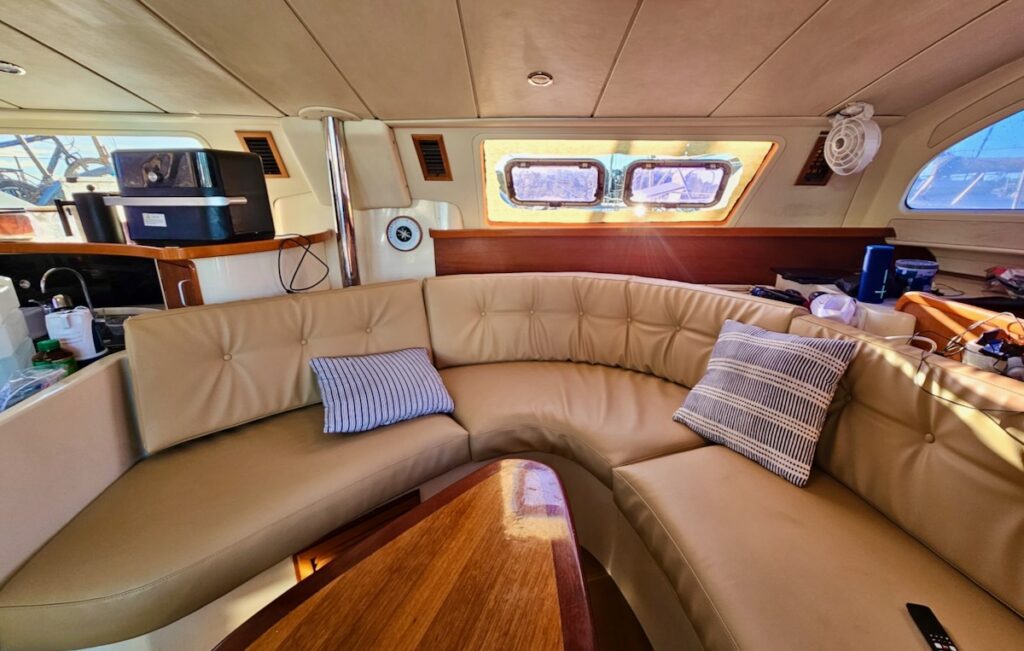
The new windows fit perfectly and are sealed up tight. And we love our new upholstery!
Replacing the Generator
While doing all this work, we started looking at our generator. This provides us extra power when we’re at anchor for longer periods and not getting enough solar. The last time we had this issue was before we left New Zealand in early winter, and during rainy periods.
Our generator fits in one of the rear lazerettes. The specs said that it would do both 120V and 240V with a change of wiring inside. But once we started looking at it, we realized that it too had sustained damage from the water. Changing the wiring would be a fairly large project, and we weren’t sure whether the generator would survive much longer. It was rusty from top to bottom. So we decided to order a new one – a quieter Fischer Panda 5000w.
We replaced the generator after we were finished in the yard, so it delayed our departure a bit. I feel it was well worth it. The new one is incredibly quiet and gives us a ton of power.
Getting Go Back on the Water, and on the Move
Go is back on the move. After five months, we left Port Macquarie for warmer winds. Our new engines will keep us moving north. Hopefully we’ll never have to go through that again, as it was a challenging and time-consuming experience but we learned a lot.
We also made some good friends with the teams at Shotgun Marine, d’Albora Marina, and the Boatyard. They did excellent work.
So what do you think about the improved Go? Are you surprised with how long everything took? Share your thoughts in the comments.


Great to read, that finally all went so well. Congratulations to your endurance – I would not have had the patience. No we will start looking back and hope to see you appearing on the horizon soon.
Happy sailing!
Kobi and Pia / SY Lupina
Thank you, Kobi and Pia. Hopefully we catch up to you soon. We are following your track on noforeignland!
Congrats for getting back in the water after all the work done. Sounds like GO will be better than new.
Thanks for the great update. I’m happy that you are back on your way with some great new upgrades. I’m curious to know more details on your insurance plan and what it ended up covering. Feel free to send info privately through email, FB, WhatsApp or Tana.
Happy sailing
Sven
I’m happy to read of your progress. I can’t believe the damage! BTW, what make is your boat? I was very surprised that any front windows could fail. Enjoy being back on the water! I sure miss it.
Our boat is a Leopard 43. The windows are 10mm plexiglass. Very hard and quite amazing they broke. There are steps which initially I thought would be protection for the window, but on thinking about it realised it probably funneled the wave water onto the window which probably increased the pressure on them.
Thanks for the comment. We’re happy to be back moving again.